


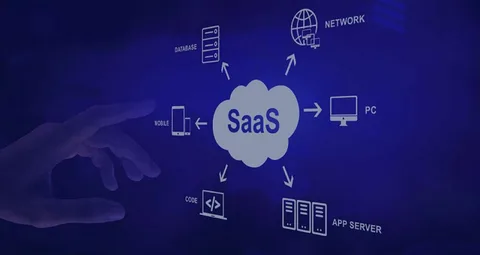
The SaaS ecosystem continues to evolve at an impressive pace, driven by growing customer expectations, the maturity of cloud platforms, and the increasing adoption of automation and AI. Businesses today depend on digital solutions more than ever, and any SaaS product released into the market must be secure, resilient, scalable, and built using modern engineering practices. As companies expand globally, their applications must handle high traffic, complex data flows, and security risks that are far more sophisticated than a few years ago.
For organisations partnering with a custom app development company or planning to enhance their internal software development services, adopting future-ready engineering principles is essential. Let’s look at the best practices shaping the development of secure and scalable SaaS applications heading into 2026.
Why Does Security Matter More Than Ever in SaaS Development?
Security has shifted from being a backend concern to a core business priority. Customers demand transparency about how their data is stored, processed, encrypted, and protected. With the rise of hybrid work environments and multi-device usage, the attack surface for cybercriminals has expanded. Additionally, evolving compliance requirements across regions push SaaS providers to adopt robust security frameworks early in the development process.
A secure SaaS app earns customer trust, reduces downtime, protects intellectual property, and supports smoother scaling.
Designing SaaS Architecture for Long-Term Scalability
A scalable SaaS product is one that can grow with its users without compromising performance. Scalability is not just about adding more servers; it is about designing an architecture that supports expansion at every layer—application, database, networking, and integrations.
Modern SaaS systems often rely on microservices, containerization, and serverless components to ensure each part of the product can scale independently. This minimizes bottlenecks and helps businesses serve customers efficiently even during traffic surges.
Best Practices for Building Secure and Scalable SaaS ApplicationsStart With a Future-Proof Architecture
Modern SaaS apps are built using modular structures that allow developers to update features independently without affecting the entire system. Microservices architecture paired with container orchestration platforms like Kubernetes helps teams maintain agility and scalability. It also enables faster rollouts and reduces deployment risks.
A forward-thinking custom app development company will evaluate the long-term growth goals of a business before designing the underlying architecture, ensuring the product stands strong as customer demands increase.
Implement Strong Authentication and Access Control
User identity management is at the heart of SaaS security. Implementing secure authentication protocols like OAuth 2.0, SSO, MFA, and role-based access control reduces unauthorized access and strengthens overall platform safety. As the security landscape advances, biometric authentication and adaptive access control are also becoming common in enterprise-grade SaaS systems.
Encrypt Everything—Data at Rest and in Transit
End-to-end encryption is now standard practice. Encryption ensures customer data remains protected during transmission and storage. Using modern encryption standards and enforcing TLS across all communication layers prevents data breaches and man-in-the-middle attacks.
Adopt DevSecOps for Continuous Security
Traditional security checks at the end of the development cycle are no longer enough. DevSecOps integrates security into every stage of development. Automated code scanning, vulnerability assessments, dependency checks, and compliance validation help catch issues early. This approach ensures teams deliver secure and stable updates without slowing down development.
Use Cloud-Native Features to Achieve Scalability
Leading cloud platforms like AWS, Azure, and Google Cloud offer automatic load balancing, autoscaling, CDN services, managed databases, and serverless workflows. Implementing these features allows SaaS apps to maintain consistent performance during usage spikes. Because these services operate on consumption-based pricing, businesses can scale efficiently without overspending.
Optimize Database Management
Databases are the foundation of scalability. Poorly optimized databases can slow down even the most powerful applications. Using distributed databases, database sharding, caching layers, and NoSQL solutions—when appropriate—enables systems to handle large volumes of queries and data.
Build for API-First Integrations
SaaS users expect seamless integrations with their existing tools. An API-first approach ensures your application can communicate easily with CRM systems, ERPs, communication apps, and analytics platforms. As your user base grows, well-documented APIs help reduce development hurdles and improve extensibility.
Ensure Full Compliance With Industry Standards
Compliance is no longer optional for SaaS providers. Standards such as SOC 2, GDPR, CCPA, HIPAA, and PCI-DSS govern how businesses handle sensitive data. A compliance-focused architecture ensures your app can launch in multiple regions without legal challenges. Experienced teams offering software development services integrate compliance measures right from the design phase.
Put Continuous Monitoring in Place
Monitoring tools allow teams to detect performance dips, security threats, and unusual patterns in real time. Log management, incident response workflows, and automated alerts help ensure rapid action during anomalies. Predictive monitoring powered by AI is also gaining traction, enabling developers to address potential failures before they impact users.
How to Maintain Performance as User Demand Grows?
Scaling isn’t just about handling more users; it’s about maintaining speed, security, and stability as the system evolves. Techniques like CDN delivery, API rate limiting, intelligent caching, and asynchronous processing create a high-performance environment that doesn’t buckle under pressure. Continuous optimization ensures customers enjoy a smooth user experience even as the product expands globally.
How to Choose the Right Team for SaaS Development?
Partnering with the right development team makes a tremendous difference. A reliable custom app development company will focus on strategy, security, architecture, and long-term scalability—not just coding. Their experience across industries helps them anticipate challenges and build solutions that support sustainable growth. Teams offering specialized software development services often combine domain expertise with cloud engineering skills, which is crucial for modern SaaS projects.
Future Trends Shaping SaaS Development
Several emerging trends will influence how SaaS apps are built throughout 2026 and beyond:
- AI-driven automation and predictive capabilities
- Zero-trust security architectures
- Composability and modular app ecosystems
- Serverless architectures gaining wider adoption
- More advanced API marketplace ecosystems
- Greater demand for self-service onboarding and user customization
These trends emphasize the need for agility, strong security, and efficient scaling strategies.
FAQs
1. What makes SaaS applications more secure today compared to older systems?
Modern SaaS solutions use advanced authentication methods, automated threat detection, encryption, and continuous monitoring. They benefit from cloud-native security features that protect infrastructure, applications, and data at every layer.
2. How can I ensure my SaaS product scales without performance issues?
Start with an architecture that supports horizontal scaling, use microservices, optimize databases, and leverage cloud-native tools like autoscaling, load balancing, and CDN services. Regular performance testing helps identify issues early.
3. What role does DevSecOps play in SaaS development?
DevSecOps integrates security into the entire development lifecycle, ensuring vulnerabilities are detected early. This approach improves delivery speed while maintaining high security and compliance standards.
4. Should startups invest in custom SaaS development or use off-the-shelf platforms?
Startups needing unique workflows, high security, and future scalability often benefit from custom solutions. A custom app development company can build a tailored system that aligns with long-term goals, while off-the-shelf tools may limit growth and flexibility.
5. How important are integrations for modern SaaS platforms?
Extremely important. Most businesses rely on multiple tools. API-based integrations allow seamless data flow, improve user experience, and make your SaaS product more adaptable to customer needs.
