


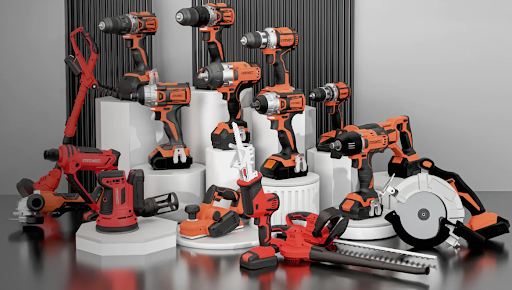
Supplying power tools for construction projects is fundamentally different from supplying tools for retail or DIY use. Construction environments are demanding, usage intensity is high, and tool failure directly affects project timelines and labor efficiency.
For buyers sourcing power tools wholesale for construction supply, product selection decisions must be practical, conservative, and performance-driven. This guide focuses on what truly matters when choosing power tools for construction use at wholesale scale.
Start with Jobsite Conditions, Not Product Categories
Construction tools are used in harsh conditions: dust, vibration, moisture, and continuous operation. Selecting tools based only on category labels—such as drills, grinders, or saws—often leads to mismatches in real-world use.
Buyers should first define jobsite conditions:
- Indoor vs outdoor work
- Continuous operation vs intermittent use
- Skilled operators vs mixed-experience crews
These factors determine durability requirements more than the tool name itself.
Durability Comes Before Maximum Performance
In construction supply, durability is often more valuable than peak performance. A tool that delivers slightly lower output but survives long working hours is usually a better choice than a high-powered tool with shorter service life.
Wholesale buyers should prioritize:
- Robust housing and internal protection
- Proven motor stability under load
- Resistance to dust and debris
Tools designed for sustained use reduce downtime, replacements, and jobsite disruptions.
Power Rating Should Match Application, Not Marketing
Over-specifying power is a common mistake. Higher wattage or torque does not always improve productivity and can increase tool weight, energy consumption, and operator fatigue.
Buyers should match power levels to actual applications:
- Medium-duty drilling and fastening cover most construction needs
- Heavy-duty tools should be selected selectively, not as defaults
Balanced specifications usually perform better across multiple projects and operator skill levels.
Consistency Matters More Than One-Time Samples
At wholesale scale, construction supply depends on consistency. Tools must perform the same across multiple deliveries, batches, and projects.
Buyers should confirm:
- Stable specifications across production runs
- Consistent component sourcing
- No frequent design or configuration changes
Inconsistent tools create training issues, spare parts problems, and uneven jobsite performance.
Ergonomics and Operator Fatigue Are Real Cost Factors
In construction environments, tools are used for hours at a time. Poor ergonomics lead to fatigue, slower work, and higher injury risk.
Wholesale buyers should evaluate:
- Tool balance and grip design
- Vibration control
- Weight relative to output
Tools that reduce fatigue improve productivity and reduce long-term labor issues, even if they cost slightly more upfront.
Battery Systems and Power Management (If Cordless)
For construction supply involving cordless tools, battery systems become a strategic decision.
Buyers should consider:
- Battery compatibility across tool models
- Charging time and battery lifecycle
- Performance stability under load
A fragmented battery system increases downtime and inventory complexity. Shared platforms simplify jobsite management.
Maintenance, Repair, and Replacement Planning
Construction tools experience wear. Buyers should assess how tools are supported after delivery.
Important considerations include:
- Availability of spare parts
- Ease of repair or component replacement
- Clear handling of defective units
Wholesale supply succeeds when tools can be maintained, not just replaced.
Supply Stability and Reordering Capability
Construction projects often require phased supply. Tools selected must be available not only for the initial order, but for repeat and follow-up purchases.
Buyers should confirm:
- Long-term availability of selected models
- Predictable lead times
- No sudden discontinuation of core tools
Reliable reordering is essential for multi-phase construction projects.
Avoid Overloading the Assortment
Wholesale construction supply does not benefit from overly broad assortments. Too many variations complicate training, maintenance, and inventory management.
A focused selection of proven models typically performs better than a wide but inconsistent range.
Construction Supply Requires Conservative Decisions
In construction environments, tool failure has immediate consequences. Wholesale buyers should favor proven performance, stable supply, and consistent quality over novelty or marginal price advantages.
Power tools selected for construction supply must support long working hours, repeat use, and predictable reordering. Practical selection decisions—based on real jobsite conditions and long-term planning—reduce risk and support smoother project execution.
