


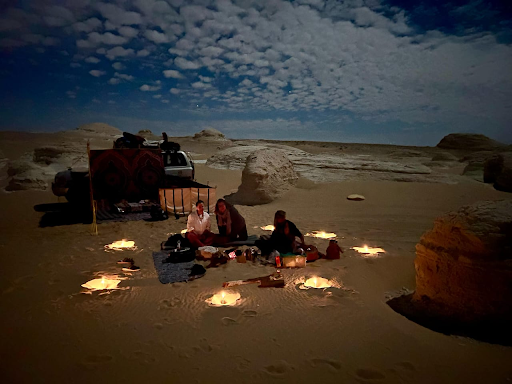
The Egyptian Sahara represents one of Earth’s most extreme and mesmerizing landscapes: a vast ocean of sand, rock, and sky where ancient civilizations flourished, caravan routes connected distant worlds, and nature sculpted monuments rivaling those built by pharaohs. Covering approximately 680,000 square kilometers of Egypt’s western territory, this portion of the greater Sahara Desert offers travelers an extraordinary journey into geological wonders, archaeological treasures, and nomadic cultures that have endured for millennia. Far from being an empty wasteland, the Egypt Sahara pulses with life, history, and landscapes so otherworldly they challenge our understanding of what Earth can create.
Geography and Geological Marvels
The Egypt Sahara encompasses several distinct regions, each with unique characteristics. The Western Desert, Egypt’s largest geographical division, contains the famous Great Sand Sea, an enormous expanse of towering dunes extending into Libya. These longitudinal dunes, some reaching heights of 100 meters, march in parallel formations across hundreds of kilometers, their ridges oriented by prevailing winds that have shaped them over thousands of years.
The Black Desert, located near Bahariya Oasis, presents a stark contrast with its volcanic hills covered in black stones debris from ancient eruptions that shattered across the landscape. Walking through this region feels like traversing an alien planet, the dark rocks absorbing sunlight and creating intense heat pockets that shimmer in the midday sun.
Perhaps most spectacular is the White Desert, a protected national park featuring surreal chalk-rock formations eroded into fantastic shapes. Millennia of wind and sand have carved these limestone structures into mushrooms, spires, chickens, and abstract sculptures that defy description. The brilliant white color comes from calcium deposits dating to when this area lay beneath a prehistoric ocean. At sunset, these formations transform into a gallery of natural art, glowing pink, orange, and purple as light plays across their weathered surfaces.
The Crystal Mountain, located between Bahariya and Farafra oases, represents another geological wonder where calcite crystals sparkle within rock formations, creating a glittering landmark that has guided desert travelers for generations. These crystals formed millions of years ago through mineral-rich water percolation, leaving behind deposits that catch sunlight like scattered diamonds.
Ancient History Beneath the Sands
The Egypt Sahara harbors archaeological treasures that rival the Nile Valley’s famous monuments. The Gilf Kebir plateau in the southwestern desert contains prehistoric rock art dating back 8,000-10,000 years, depicting a time when the Sahara supported abundant wildlife and human communities. The Cave of Swimmers, made famous by the novel and film “The English Patient,” shows figures in swimming positions, providing evidence that this now-hyperarid region once contained lakes and rivers.
The Dakhleh Oasis archaeological landscape reveals continuous human occupation spanning 400,000 years, one of the longest recorded sequences of human habitation anywhere. Excavations have uncovered Stone Age tools, Roman settlements, early Christian monasteries, and Islamic fortifications, demonstrating how the oases served as critical waypoints for trans-Saharan trade and cultural exchange.
Siwa Oasis, though remote and isolated until recent decades, hosted one of the ancient world’s most important religious sites, the Oracle of Amun. Alexander the Great undertook a perilous journey across the desert to consult this oracle in 331 BCE, seeking confirmation of his divine parentage. The temple ruins at Aghurmi still stand, testament to the spiritual significance this distant Saharan outpost held for Mediterranean civilizations.
Ancient caravan routes crisscrossed the Egypt Sahara, connecting sub-Saharan Africa with Mediterranean ports. The Darb el-Arbain (Forty Days Road) served as the primary slave and trade route from Sudan through the Western Desert to Asyut on the Nile. Along these routes, archaeologists continue discovering ancient wells, way stations, and cargo remnants that illuminate pre-Islamic and Islamic-era commerce.
Flora, Fauna, and Desert Adaptations
Despite its harsh reputation, the Egypt Sahara supports remarkable biodiversity, with species displaying extraordinary adaptations to extreme aridity and temperature fluctuations. The addax antelope, once common but now critically endangered, can survive indefinitely without drinking water, extracting all necessary moisture from vegetation. Desert foxes, including the elegant fennec with its oversized ears for heat dissipation, hunt at night when temperatures drop and small mammals emerge.
Reptiles thrive in the Saharan environment, with various lizard and snake species emerging during cooler hours. The desert monitor lizard reaches impressive sizes, while horned vipers bury themselves in sand to ambush prey and escape midday heat. Scorpions and various beetle species complete the food web, with some beetles harvesting moisture from fog using specially adapted wing cases.
Plant life, though sparse, demonstrates remarkable resilience. Acacia trees survive in wadis dry riverbeds that occasionally receive flash flood water. Their deep tap roots access underground moisture while providing crucial shade for animals and humans. The desert date palm flourishes near oases and underground water sources, its fruits providing essential nutrition for desert dwellers throughout history.
Following rare rainfall events, the desert undergoes miraculous transformations. Dormant seeds, sometimes decades old, burst into bloom within days, carpeting previously barren areas with wildflowers. This explosive growth attracts insects, birds, and herbivores in a brief celebration of abundance before the desert returns to its typical austerity.
Bedouin Culture and Desert Wisdom
The Bedouin tribes inhabiting the Egypt Sahara possess knowledge accumulated over countless generations, an encyclopedia of survival techniques, navigation methods, weather prediction, and natural resource management. Their traditional black goat-hair tents provide surprisingly effective insulation against both heat and cold, while their social codes ensure hospitality even in environments where resources are scarce.
Bedouin navigation relied on intimate knowledge of stars, prevailing winds, sand patterns, and subtle landscape features invisible to untrained eyes. They could predict sandstorms hours before arrival, locate underground water through plant indicators and animal behavior, and traverse seemingly featureless terrain with absolute confidence. Though modern GPS has reduced reliance on these skills, elder Bedouins still transmit this knowledge, recognizing its cultural and practical value.
Traditional Bedouin economy centered on camel herding, trading, and guiding caravans across desert routes. Camels, perfectly adapted to Saharan conditions, can drink 100 liters in minutes and survive weeks without water, storing fat in their humps for energy. The Bedouin relationship with these animals approaches partnership mutual dependence creating deep bonds between herders and their herds.
Modern Sahara Tourism and Adventure
Contemporary tourism has transformed access to the Egypt Sahara, making experiences once reserved for hardy explorers available to properly prepared travelers. Safari operators offer expeditions ranging from day trips to multi-week expeditions, utilizing 4×4 vehicles equipped for desert travel. These journeys combine camping beneath star-filled skies, visiting remote oases, and exploring geological formations that seem designed by surrealist artists.
Adventure activities available in the Egypt Sahara include sandboarding down towering dunes, an experience offering thrills similar to snowboarding but with softer landings. Camel treks provide slower-paced immersion into desert rhythms, allowing travelers to experience landscapes as traders did centuries ago. Hot air balloon rides over the White Desert reveal patterns and formations invisible from ground level, creating photographers’ dreams.
Stargazing in the Sahara ranks among Earth’s premier astronomical experiences. The absence of light pollution, combined with extremely clear, dry air, reveals celestial displays urban dwellers never witness. The Milky Way stretches visibly across the sky, meteor showers become spectacular events, and planetary viewing exceeds what most telescopes can achieve from light-polluted locations.
Climate and Environmental Challenges
The Egypt Sahara experiences some of Earth’s most extreme temperature variations. Summer daytime temperatures regularly exceed 45°C (113°F), while winter nights can drop below freezing. This range, sometimes spanning 30°C in 24 hours, creates physical challenges requiring careful preparation and respect for the environment’s power.
Rainfall averages less than 25mm annually in most areas, with some regions experiencing years without precipitation. When rain does fall, it often arrives as violent thunderstorms causing flash floods through wadis. These sudden deluges, though brief, reshape landscapes and can prove deadly to the unprepared caught in normally dry channels.
Climate change presents mounting challenges for the Egypt Sahara ecosystems and human communities. Rising temperatures, changing precipitation patterns, and increased desertification pressure already-stressed environments. Ancient aquifer systems supporting oases show declining water levels, threatening agricultural traditions maintained for millennia. Conservation efforts now focus on sustainable tourism, water management, and preserving both natural and cultural heritage.
Planning Your Egypt Sahara Adventure
Successful Saharan travel requires thorough planning and appropriate equipment. The cooler months from October through March offer the most comfortable conditions, though even winter days can be hot. Essential items include sun protection (high SPF sunscreen, hat, sunglasses), layers for temperature fluctuations, sturdy footwear, and abundant water typically 4-5 liters per person daily in cooler months, more in summer.
Choosing reputable tour operators with experienced guides, proper permits, and emergency protocols is essential. The desert tolerates no mistakes, navigation errors, vehicle breakdowns, or inadequate supplies can quickly become life-threatening. Licensed operators carry satellite phones, GPS systems, spare parts, and extra supplies while maintaining communication with authorities.
Respecting local customs enhances experiences and shows appreciation for communities sharing their homeland. Modest dress, seeking permission for photographs, and genuine interest in cultural traditions create positive exchanges. Supporting local businesses and guides provides economic benefits to desert communities while enriching traveler experiences through authentic interactions.
Conclusion: Frequently Asked Questions
When is the best time to visit the Egypt Sahara? October through April offers optimal conditions, with November through February providing the coolest temperatures. Avoid summer months (June-August) when temperatures become dangerously high and most tour operators suspend desert expeditions.
Is it safe to travel in the Egyptian Sahara? Yes, when traveling with licensed, experienced tour operators and following safety guidelines. Independent travel requires extensive desert experience, proper equipment, and permits. Always inform authorities of travel plans and expected return times.
What should I pack for a Sahara desert trip? Essentials include layered clothing for temperature extremes, sun protection, closed-toe shoes, personal medications, flashlight/headlamp, and toiletries. Tour operators typically provide camping equipment, but confirm inclusions beforehand. Bring more water than you think necessary.
Can I visit the Egypt Sahara independently? While possible for extremely experienced desert travelers with proper equipment, vehicles, and navigation skills, independent travel is not recommended. The risks of vehicle breakdown, navigation errors, or medical emergencies make guided tours substantially safer.
How physically demanding are Egypt Sahara tours? This varies considerably by tour type. Basic camping safaris require moderate fitness for getting in/out of vehicles and walking on sand. More adventurous options involving extensive hiking, sandboarding, or camel trekking demand higher fitness levels. Consult operators about specific physical requirements.
