


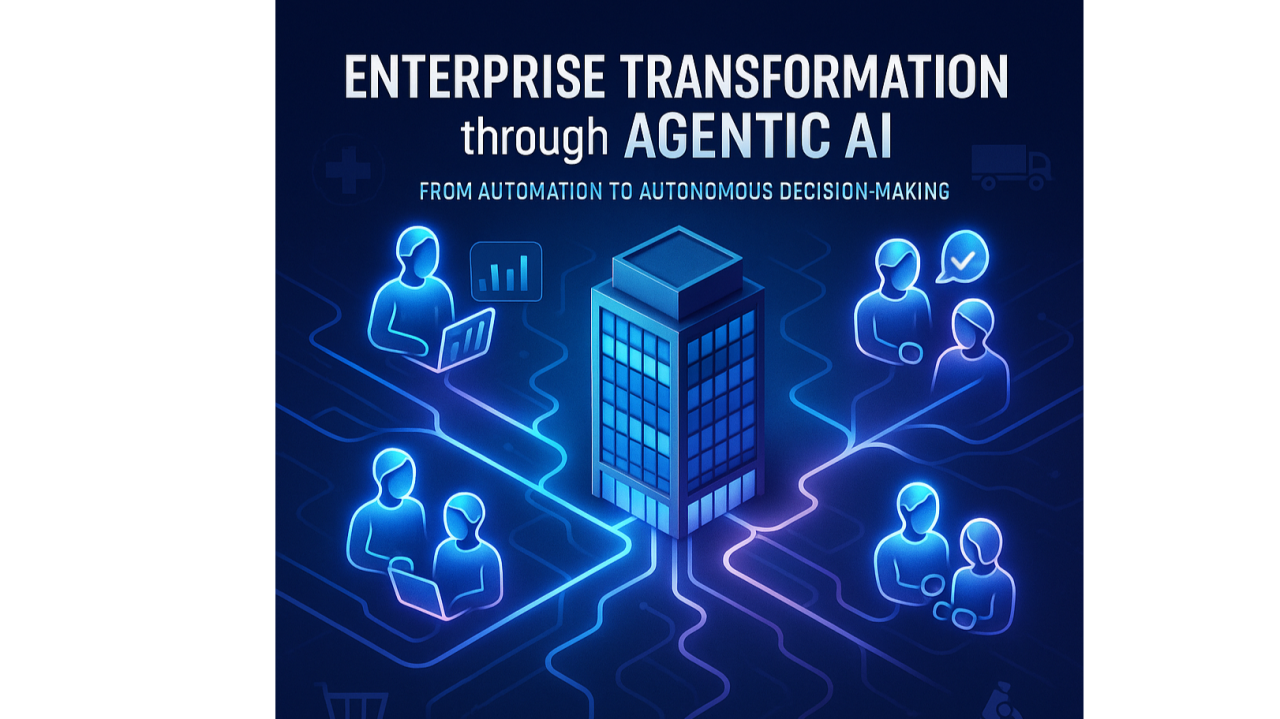
If you have ever managed localization inside a growing enterprise, you know the workflow is rarely simple. Content moves between marketing, product, legal, regional managers, translators, and compliance teams. Emails pile up. Deadlines shift. Versions get mixed up. And somehow, you are still expected to launch globally at the same time. This is exactly why agentic AI for localization is transforming enterprise workflows.
Localization is no longer a side function. It sits at the center of global expansion. When workflows are inefficient, your entire go to market strategy slows down. When workflows are intelligent and automated, global scaling becomes smooth and predictable. That is the real impact of modern agentic AI solutions.
The Hidden Complexity of Enterprise Localization
Enterprise localization involves far more than translation. It includes content identification, terminology management, quality assurance, compliance checks, publishing approvals, and performance tracking.
As your company expands into more markets, complexity grows exponentially. Research shows that enterprises managing content across 10 or more languages experience a 35 percent increase in coordination overhead when relying on manual processes.
The problem is not effort. The problem is workflow fragmentation.
Automating Content Detection and Task Assignment
One of the first ways agentic AI services & solutions enhance workflows is through intelligent content detection. Instead of relying on teams to flag what needs translation, AI monitors your CMS, product updates, and marketing platforms automatically.
When new content appears or existing content changes, the system identifies it instantly. It classifies the content by language requirement, assigns it to the appropriate localization pipeline, and initiates translation workflows.
This eliminates delays caused by manual coordination.
Streamlining Terminology and Brand Management
Maintaining consistent terminology across regions is one of the biggest challenges in enterprise localization. Different translators may use different phrasing, which can dilute brand clarity.
Agentic AI systems centralize brand guidelines, tone documentation, and approved glossaries. Every localized asset is checked against these standards automatically.
This ensures that your messaging remains consistent across languages while still adapting culturally. Consistency builds trust, especially for US enterprises operating globally.
Reducing Approval Bottlenecks
Traditional localization workflows often require multiple approval layers. Marketing reviews tone. Legal reviews compliance. Regional managers verify cultural accuracy.
Agentic AI for localization reduces unnecessary approvals by embedding validation rules directly into the system. The AI verifies terminology, regulatory compliance, and formatting automatically before routing content for final human review only when required.
Enterprises implementing AI assisted approval processes report up to 30 percent faster localization cycles.
Fewer bottlenecks mean faster launches.
Enabling Continuous Localization
Modern enterprises update content constantly. Product features evolve. Promotions change weekly. Support documentation expands regularly.
With traditional workflows, localization often happens in batches, creating delays. Agentic AI enables continuous localization. Every update triggers an automated adaptation process across supported languages.
This keeps global audiences aligned with your domestic messaging in real time.
Continuous localization supports agile business models.
Leveraging Agentic AI Data Solutions for Workflow Optimization
Workflows improve when they are informed by data. Agentic AI data solutions collect metrics on translation speed, revision frequency, error rates, and regional performance.
The system identifies bottlenecks and recommends workflow adjustments automatically. For example, if certain content types consistently require heavy revision, the AI flags patterns and refines translation rules.
This data driven refinement makes your localization workflow smarter over time.
Improving Cross-Department Collaboration
Localization touches multiple departments. Without structured processes, misalignment can occur.
Agentic AI creates a centralized platform where stakeholders can monitor progress, review content, and track performance metrics. Everyone sees the same data and status updates.
This transparency reduces confusion and strengthens collaboration between marketing, product, and regional teams.
Better visibility leads to better execution.
Enhancing Quality Control
Quality assurance is essential in localization. Errors in translated legal disclaimers or product specifications can create compliance risks.
Agentic systems perform automated grammar checks, terminology validation, and formatting reviews before content goes live. Human reviewers then focus on nuanced cultural adjustments rather than basic corrections.
Enterprises using hybrid AI quality control models report up to 40 percent fewer post publication corrections.
Higher quality strengthens brand credibility.
Scaling Localization Without Scaling Headcount
As enterprises expand globally, localization demands increase. Hiring additional translators and managers increases operational costs significantly.
By integrating agentic AI solutions for enterprises, you scale workflow capacity without proportionally increasing headcount. AI handles repetitive tasks and coordination, allowing your team to focus on strategy and oversight.
This scalability supports sustainable global growth.
Preparing Your Enterprise for Intelligent Workflows
Localization workflows will only become more complex as digital ecosystems expand. More content channels, more markets, and higher customer expectations require smarter systems.
Investing in agentic AI for localization transforms fragmented processes into intelligent, automated pipelines. Your enterprise gains speed, visibility, and operational efficiency.
When workflows improve, everything improves.
Conclusion
Enterprise localization is no longer just about translating content. It is about orchestrating complex workflows efficiently across departments and regions. Agentic AI for localization enhances these workflows by automating content detection, reducing approval bottlenecks, centralizing brand guidelines, and leveraging data driven optimization. By adopting agentic AI, your enterprise can streamline operations, improve quality, and scale globally without operational chaos. If your goal is to modernize localization from the inside out, intelligent workflow automation is the foundation for long term success.
