


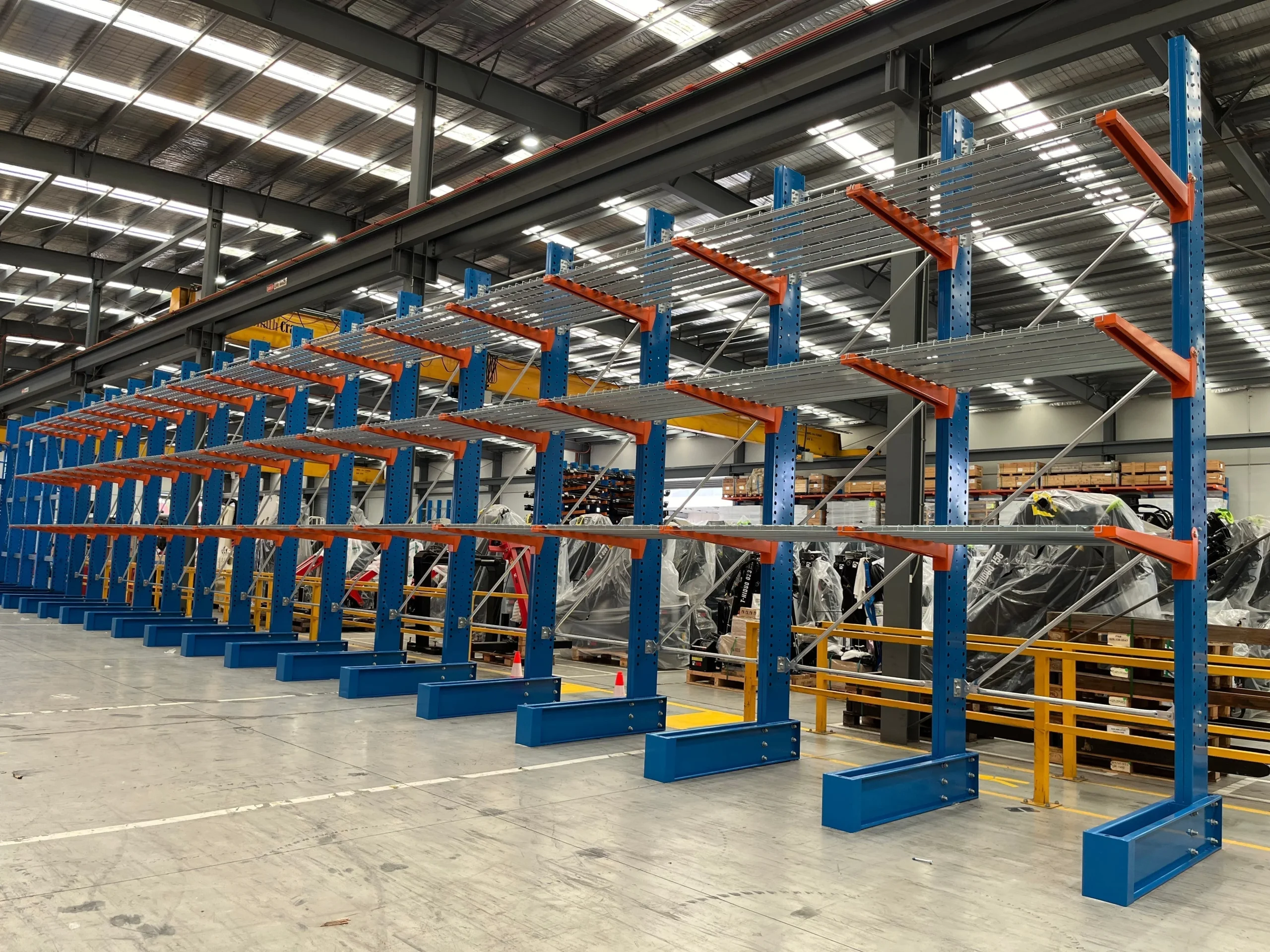
Industrial storage systems play a critical role in ensuring safe, efficient, and scalable warehouse operations. As warehouses and manufacturing environments become more complex, businesses face challenges such as limited space, heavier loads, and higher operational throughput. Selecting the right heavy-duty racking solution is therefore essential not only to maximise storage capacity, but also to support safety, productivity, and long-term business growth.
What Is Heavy Duty Racking?
Before selecting a system, it is important to understand what heavy-duty racking is designed to do and where it is commonly used.
Definition and Purpose of Heavy Duty Racking
Heavy-duty racking refers to industrial-grade storage systems engineered to support high load capacities and continuous daily operations. These systems are built using reinforced steel components to safely store palletised, bulky, or heavy goods.
Industries That Use Heavy-Duty Racking
Heavy-duty racking is widely used in warehouses, logistics and distribution centres, manufacturing plants, cold storage facilities, and industrial spare parts warehouses where strength and durability are critical.
Load Capacities and Structural Considerations
These systems are designed with specific load ratings for beams, uprights, and bays. Proper structural design ensures even load distribution, long-term stability, and compliance with safety standards.
1. Assess Your Storage Requirements
Choosing the right racking system starts with a clear understanding of what needs to be stored and how it moves within your facility.
Types of Materials and Goods to Store
Different goods require different storage approaches. Palletised products, loose cartons, long materials, and machinery components each demand specific racking configurations.
Weight, Size, and Shape Considerations
Accurate knowledge of item weight, dimensions, and load characteristics is essential to selecting a racking system that can safely support your inventory.
Frequency of Access and Flow Patterns
Fast-moving goods may require direct access racking, while slower-moving inventory can be stored in higher-density systems. Understanding flow patterns improves efficiency and reduces handling time.
2. Compare Popular Heavy Duty Racking Systems
Not all heavy-duty racking systems serve the same purpose. Comparing options helps identify the most suitable solution.
Pallet Racking Systems
Pallet racking is ideal for palletised goods and high-load storage. It offers structured, vertical storage and is compatible with forklifts and reach trucks.
Cantilever Racking Systems
Cantilever racking is designed for long, irregular, or oversized items such as pipes, timber, and steel sections, offering open-front access and flexible arm configurations.
Mezzanine Racking Systems
Mezzanine racking adds multi-level storage by utilising vertical space. It is suitable for cartons, pallets, and mixed inventory where floor space is limited.
Drive-In and Drive-Through Racking
These high-density systems are designed for bulk storage of similar goods, reducing aisle space while increasing overall storage capacity.
3. Evaluate Space and Layout Constraints
Physical space limitations directly influence racking design and performance.
Warehouse Height and Floor Area
Available ceiling height determines rack height and storage density, while floor area affects aisle spacing and rack layout.
Aisle Width and Equipment Access
Forklift type, turning radius, and handling equipment must be considered to ensure safe and efficient access to stored goods.
Future Expansion Possibilities
Selecting modular industrial racking systems allows for future expansion or reconfiguration as business needs evolve.
4. Prioritise Safety and Compliance
Safety is a non-negotiable factor in heavy-duty racking selection.
Load Ratings and Safety Standards
Racking systems must meet defined load ratings and comply with workplace safety and building standards to prevent structural failure.
Operational and Equipment Safety Factors
Consider forklift impact protection, rack anchoring, and seismic or vibration risks where applicable.
Inspection and Maintenance Planning
Routine inspections and preventive maintenance are essential to detect damage early and maintain long-term racking integrity.
5. Calculate Cost vs. Long-Term Value
Racking systems should be evaluated beyond upfront cost alone.
Initial Investment vs Operational Efficiency
While heavy-duty racking requires an initial investment, efficient layouts reduce handling time and improve daily productivity.
Durability and Lifecycle Costs
High-quality systems last longer, require fewer repairs, and have a lower total cost of ownership over time.
ROI Through Improved Storage and Workflow
Better space utilisation, safer operations, and smoother workflows deliver measurable long-term returns.
Choose the Right Racking System to Support Long-Term Industrial Growth
Selecting the right heavy-duty racking solution requires balancing load requirements, space constraints, safety, and long-term operational goals. By aligning your industrial racking choice with business needs, you ensure safer operations and scalable growth. Aracking & Shelving Solutions provides expert consultation, customised racking design, professional installation, and ongoing support to help you implement the right heavy-duty racking system. Contact Aracking & Shelving Solutions today to develop a storage solution tailored to your industrial requirements and future expansion plans.
