


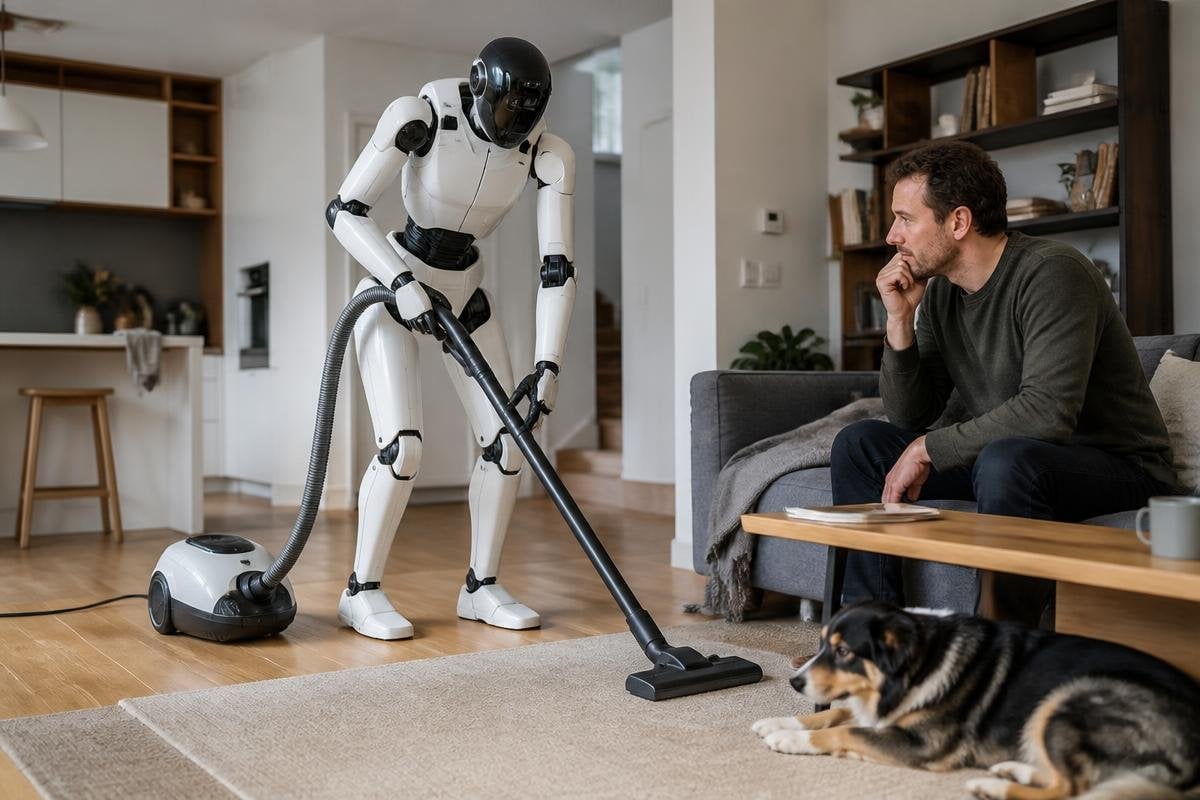
A humanoid robot can look ready for a living room long before it can work safely in one. Homes have stairs, loose cables, pets, glass, wet floors, and people who change the plan without warning.
The useful question is narrower: which household tasks can a robot perform without constant help, and what evidence would show that it can keep doing them?
- Task first: carrying laundry matters more than a human-shaped shell.
- Safety first: the robot must stop when a person, pet, or object enters its path.
- Proof first: a short demo cannot answer how the system behaves after hours of work.
Why a home is a hard place for a robot
A factory gives a robot fixed stations, known objects, and marked paths. A home gives it a changing layout. The same chair may move, a bag may block a doorway, and a cup may sit near the edge of a table.
That makes perception and movement matter together. Cameras and LiDAR can help the robot map a room, while force sensors can tell it when a hand, door, or object pushes back. The robot still needs software that can choose a safe action when its view is blocked.
Human bodies also create a safety problem. A machine that carries a box near a person must control its speed, force, and stopping distance. A fall near a child or a glass table has a different cost from a missed factory pick.
The human shape may help with stairs, handles, and shelves because those spaces already fit human bodies. It also adds two legs, balance demands, and more ways for a failure to cause harm. The shape solves some access problems while creating others.
The first useful jobs will be narrow
A home robot won’t need to do every chore to earn a place. It could start with a task that has clear limits, such as moving a full laundry basket from one room to another or placing known objects into a cabinet.
Those jobs still need a complete work cycle. The robot must find the object, pick it up, carry it without dropping it, place it correctly, and return to a safe position. A video that stops after the pickup leaves most of the job unanswered.
The missing steps are where reports on humanoid robot tests matter. A report that follows the full work cycle can show whether a person had to take over before the robot reached its safe position. That handoff is the part a home buyer needs to see before trusting the robot to work alone.
A useful home system may also need a human control mode. Teleoperation means a person guides the robot from another location.
That can help during unusual tasks, but it changes the cost and privacy question. A robot that needs a remote operator every few minutes is a service with staff behind it, not a fully independent appliance.
What remains unproven
The largest gap is long-duration work in ordinary rooms. A demo can show that a robot completes one lift or walks across one floor. It doesn’t show how often it needs help, how it handles a changed room, or what happens after a battery runs low.
Cost is another open point. Without a supplied price, service fee, repair plan, or battery replacement cost, nobody can compare a humanoid with a cleaner, delivery service, or a standard appliance. A human-shaped robot may do more tasks, but each extra task can add sensors, software, maintenance, and safety checks.
Privacy needs the same plain treatment. Cameras and microphones may help a robot understand a home, yet they also collect information about the people inside it. Buyers will need clear settings for storage, remote access, and deletion before they let a machine move through private rooms.
I’d wait before treating a humanoid as a home appliance. The hardware may work in a controlled demo, but the home case stays unproven until a robot can repeat a useful task with little help and clear safety records.
A practical buying checklist
Use these checks before you judge a household humanoid robot:
- Name the task: write down the one job you expect it to do every day.
- Watch the full cycle: look for the approach, pickup, placement, return, and recovery after a mistake.
- Ask about help: find out how often a remote person must take control.
- Check the room: test stairs, narrow doors, rugs, wet floors, pets, and people crossing its path.
- Price the service: include charging, repairs, software fees, and battery work.
- Request safety records: ask how the maker measured stopping distance, force, falls, and failed tasks.
Those answers will tell you more than a human-shaped demo. The next useful proof is a robot doing one household job every day, in a real home, with its help requests and failures counted.
