


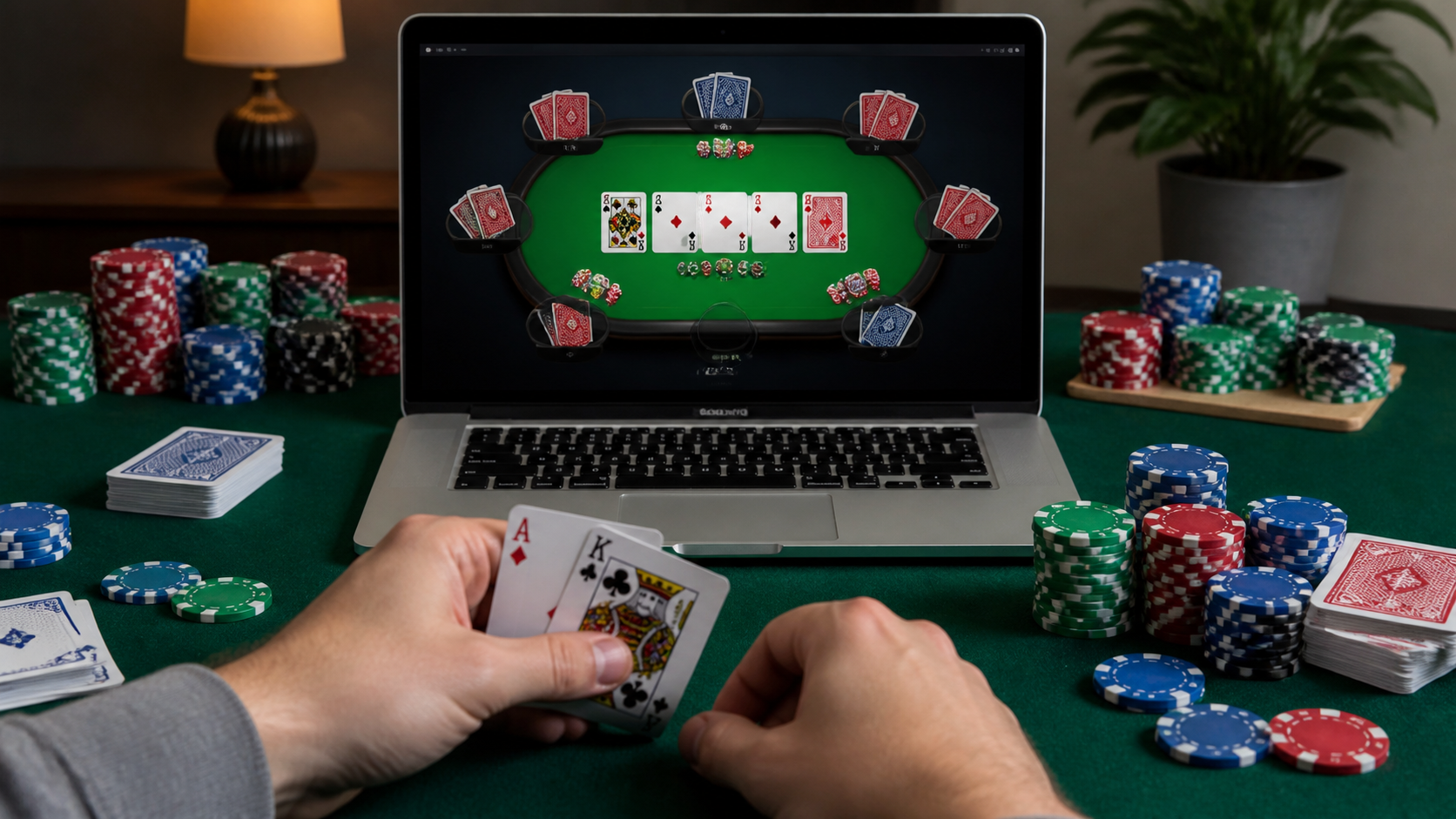
Poker online has become a familiar choice for players who want the structure of a real card game with the convenience of playing from home. It brings together strategy, patience, observation, and decision-making in a format that can be enjoyed in short sessions or longer, more focused play. For many people, the appeal is not just the chance to win a hand, but the mental challenge of reading patterns, managing risk, and staying disciplined across many rounds.
That mix of skill and uncertainty is exactly why poker remains so interesting in digital form. The online version adds its own rhythm: faster table action, multiple game formats, and fewer distractions than a live room. At the same time, it asks players to pay attention to details that are easy to overlook, such as table selection, bankroll control, and the habits that separate thoughtful play from impulsive decisions.
How Online Poker Works
At its core, online poker follows the same basic rules as the live game. Players receive cards, place bets in stages, and try to make the strongest possible hand or persuade others to fold. What changes is the pace and presentation. Instead of watching physical chips move across a table, players interact through a digital interface that keeps the game moving quickly and makes it possible to join from nearly anywhere with a stable connection.
Most platforms offer several formats, and each one creates a slightly different experience. Cash games are steady and flexible, while tournaments build pressure as blinds rise and chip stacks shrink. Some players prefer smaller tables with fewer opponents, while others enjoy larger fields that require more patience and tighter discipline. The best format often depends on how much time a person has, how comfortable they are with risk, and whether they want a slower strategic game or a faster session.
Common game formats
- Cash games for flexible buy-ins and simpler session planning
- Tournaments for longer-form play and changing pressure
- Fast-fold styles for players who prefer more hands in less time
- Heads-up tables for direct one-on-one decisions
What Makes a Good Poker Session
A strong session usually comes from preparation rather than luck alone. Good decisions in poker online are often built before the first hand is even dealt. Players who know their limits, understand the format, and choose the right table tend to have a more controlled experience than those who jump in without a plan. The goal is not to force perfect play in every hand, but to make choices that hold up over time.
Table selection matters more than many beginners expect. A table with opponents who make frequent mistakes may feel easier, but it can still be tricky if a player becomes too loose or emotional. Likewise, a table full of experienced opponents may look intimidating, yet it can help a patient player learn faster and avoid unnecessary losses. Matching the table to your comfort level is often more useful than chasing the idea of the “ideal” game.
Bankroll discipline is another part of a healthy session. Even casual players benefit from deciding in advance how much they are willing to spend and when they will stop. That approach keeps the game enjoyable and helps prevent a short run of poor hands from turning into a frustrating experience. Clear limits also make it easier to separate entertainment from emotional reactions.
Practical habits that help
- Set a spending limit before logging in
- Choose a format that fits your time and attention
- Avoid playing when distracted or tired
- Review hands after the session to spot patterns
- Leave the table when decision-making starts to slip
Strategy Basics for More Consistent Play
Strategy in poker online is less about memorizing every possible situation and more about building reliable habits. Starting hand selection is one of the most important ideas. Players who enter too many weak hands often put themselves in difficult spots later in the hand, while those who are selective usually give themselves a better chance to act with purpose. Position also matters because acting later in a betting round gives more information about what other players are doing.
Another useful habit is paying attention to betting patterns. Online play makes it easier for opponents to act quickly, but those actions still reveal something. A player who bets strongly on multiple streets may have a different range than someone who only applies pressure once. Nothing in poker is certain, yet patterns can guide decisions when a player is willing to think beyond the immediate hand. This is where patience becomes a real advantage.
It also helps to stay flexible. Some hands are worth continuing with, while others are better abandoned early. Newer players sometimes cling to a hand because they already invested chips, but that can lead to avoidable losses. Folding at the right moment is part of good strategy, not a sign of weakness. In many cases, preserving your stack creates better opportunities later in the session.
For readers who want a useful overview of the format and game options, poker online can be explored as part of a broader understanding of how digital tables are structured and played.
Choosing a Site and Managing the Experience
Choosing where to play can shape the entire experience. A good poker platform should be easy to navigate, clear about rules, and reliable in how it handles tables and account features. Many players also pay attention to the variety of games available, because a site that offers only one type of table may feel limiting over time. The right choice depends on personal preferences, not just on the size of the lobby.
Interface quality matters more than it may seem. If the table layout is confusing or the controls feel awkward, even a simple decision can take longer than it should. That extra friction can distract from the actual game. A clean layout, readable card display, and straightforward betting controls help create a smoother experience. The same is true for mobile play, where smaller screens make clarity especially important.
It is also worth thinking about how a site supports responsible play. Tools such as deposit limits, session reminders, or account controls may be available on some platforms and not on others. These features do not change the game itself, but they can help players stay within healthy boundaries. For anyone who treats poker as entertainment, that kind of support can be just as important as the games themselves.
What to look for before you play
- Clear table layouts and easy navigation
- Game types that match your preferred pace
- Fair, transparent rules and hand history access
- Useful account controls for spending and session length
- Stable performance on desktop or mobile devices
Common Mistakes to Avoid
One of the most common mistakes is playing too many hands just because the action is fast. Online poker can create the feeling that there is always another opportunity, but that does not make every hand worth entering. Loose play often leads to awkward decisions after the flop, especially when opponents show strength. Staying selective usually creates a more manageable game.
Another frequent issue is chasing losses. A difficult stretch can tempt players to increase stakes, loosen their standards, or continue playing after focus has already faded. That approach often makes the situation worse. A better response is to step back, reset, and return only when decisions feel calm and deliberate again. Poker rewards patience more than frustration.
Some players also underestimate the value of review. Even a short look back at recent hands can reveal recurring habits, such as calling too often in weak spots or betting too cautiously when value is available. Small adjustments can have a meaningful effect over time. Improvement usually comes from noticing patterns, not from trying to overhaul everything at once.
Finally, it is easy to let convenience turn into carelessness. Because online play is available at any hour, it can be tempting to sit down without a clear purpose. A better approach is to treat each session as a defined activity with a starting point, an ending point, and a reason for playing. That simple habit often leads to a more balanced experience.
Conclusion: Playing with Control and Awareness
Poker online works best when it is approached as a game of informed choices rather than quick reactions. The players who tend to enjoy it most are usually the ones who understand the structure, choose suitable tables, and stay disciplined with their time and spending. Those habits do not remove uncertainty, but they do make the game easier to navigate.
Whether someone is learning the basics or refining familiar habits, the most useful mindset is steady and realistic. A thoughtful approach, a clear limit, and attention to table dynamics can make the experience more rewarding. In that sense, the real edge is often not a dramatic move, but the ability to keep decisions clear from one hand to the next.
